

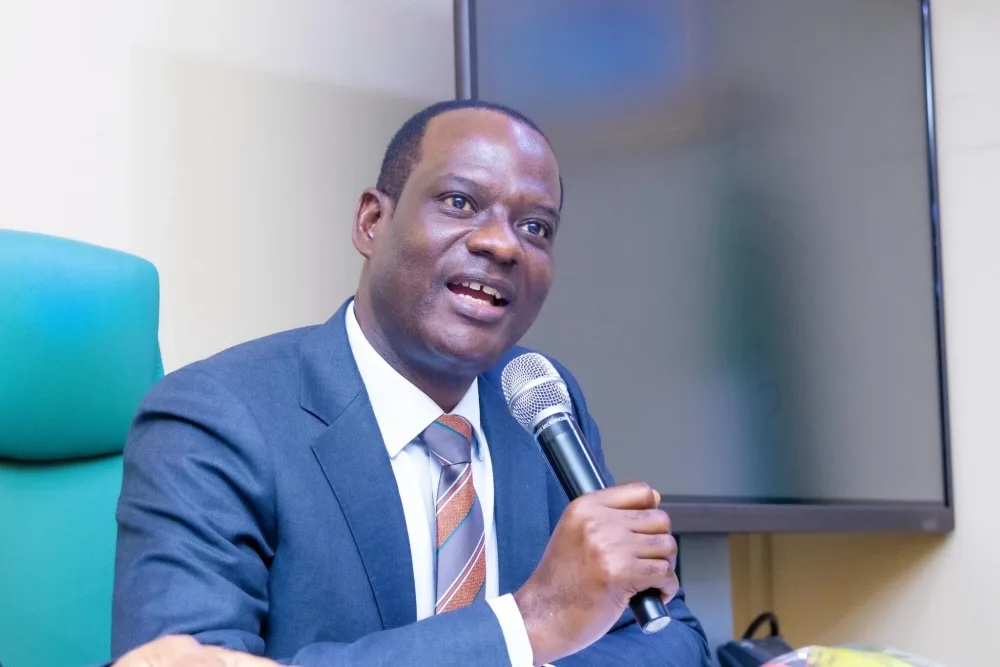
The Federal Government has denied allegations that it operated a “shadow budget” or spent more than ₦8 trillion outside the approved national budget, describing the claims as a misrepresentation of the International Monetary Fund (IMF) 2026 Article IV Consultation Report.
In a statement released on Sunday, the Minister of Finance and Coordinating Minister of the Economy, Taiwo Oyedele, said reports suggesting that about two per cent of Nigeria’s Gross Domestic Product (GDP) was spent outside the country’s constitutional budgetary framework were inaccurate and capable of misleading the public.
“The Federal Government does not operate a ‘shadow budget’ or expend public funds outside the constitutional and statutory framework established for public finance,” the minister said.
Oyedele explained that all federal expenditures are made in line with the provisions of Sections 80 to 83 and 162 of the 1999 Constitution (as amended), which require public funds to be withdrawn and spent only as authorized by laws passed by the National Assembly.
According to him, government spending is executed through duly enacted Appropriation Acts, Supplementary Appropriation Acts, and other statutory approvals. He added that capital projects extending beyond a single fiscal year are funded through legally recognized multi-year budget arrangements and approved capital rollovers.
The minister dismissed suggestions that trillions of naira had been secretly spent without legislative approval, saying such claims were unsupported by evidence.
“If such allegations are to be taken seriously, they must identify the specific projects allegedly executed without appropriation or legal authority and provide verifiable evidence,” the statement noted.
The Finance Ministry further clarified that Nigeria’s fiscal framework includes several statutory expenditures established by Acts of the National Assembly. These include statutory transfers to development commissions, debt servicing, revenue collection costs retained by designated agencies, special intervention programmes, and separately approved capital budgets for some agencies and the Federal Capital Territory.
According to the government, these expenditures are lawful, publicly disclosed in fiscal reports, and remain subject to legislative oversight, auditing, and accountability mechanisms.
The statement also rejected claims that the reported figure represented an increase in Nigeria’s fiscal deficit.
It explained that a fiscal deficit is determined by the relationship between government revenue and expenditure, not by whether projects are financed through annual appropriations, supplementary budgets, statutory transfers, or other legally approved financing arrangements.
Addressing references to the IMF report, the government said the Fund’s observations related mainly to the presentation, timing, and comprehensiveness of fiscal reporting, rather than the legality of government spending.
The statement recalled that President Bola Ahmed Tinubu had already called for an end to the practice of operating multiple and overlapping budgets. During the presentation of the 2026 Appropriation Bill to the National Assembly on December 19, 2025, the President urged lawmakers to harmonize budget implementation into a single, cohesive framework.
The Federal Government maintained that it remains committed to strengthening fiscal discipline through reforms aimed at improving budget credibility, enhancing revenue administration, digitalising public financial management systems, and strengthening treasury operations.
It added that these reforms have received positive recognition from the IMF, other multilateral institutions, international credit rating agencies, investors, and development partners.
The government urged the public to distinguish between technical issues relating to fiscal reporting and allegations of unlawful expenditure, stressing that informed public debate should be based on verified facts rather than misinterpretations.
ALSO READ: 2027: Tinubu Has No Real Opposition, Nigeria Must Move Forward — Orji Uzor Kalu [VIDEO]
The statement reaffirmed the government’s commitment to transparency, accountability, and prudent management of public resources while pledging continued collaboration with the National Assembly and oversight institutions to strengthen Nigeria’s fiscal governance.

