

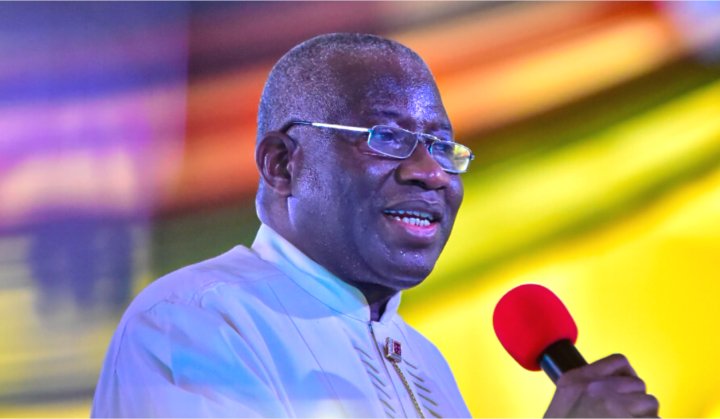
Former President Goodluck Jonathan has raised concerns over the increasing presence of serving governors, senior political office holders and influential party leaders in states conducting off-cycle elections, warning that the practice could pose a threat to Nigeria’s democratic stability.
Jonathan made the remarks while reacting to the recently concluded Osun State governorship election. Although he commended the Independent National Electoral Commission (INEC), security agencies, political parties and the people of Osun State for the peaceful conduct of the poll, he expressed concern about what he described as an emerging and troubling pattern surrounding off-cycle elections.
In a statement shared on his X handle on Tuesday, the former president said the political activities witnessed during recent governorship elections in Osun, Ekiti and Ondo states were unusual and should not become an accepted feature of Nigeria’s democratic process.
He specifically criticised the practice of serving governors, senior government officials and party leaders travelling into election states with large numbers of aides and security personnel.
According to Jonathan, political parties and their supporters have legitimate rights to campaign, mobilise voters and participate in elections. However, he warned that the massive presence of powerful political actors from outside an election state could create fear, intimidation and undue pressure among voters and political opponents.
Jonathan recalled similar situations during the 2013 Anambra and 2014 Ekiti governorship elections when he was president. He said that after receiving briefings about the presence of senior political leaders in those states, he directed party leaders and top government officials to leave.
The former president argued that political mobilisation should not evolve into a contest where government officials deploy the influence and resources attached to their offices to dominate election environments.
He questioned whether the large-scale mobilisation of governors and other senior officials during off-cycle elections is consistent with the principles of free, fair and peaceful democratic competition, noting that such practices are uncommon in many established democracies.
Jonathan further warned that allowing the trend to continue could increase political tension across the country. He questioned what could happen if governors from opposing political parties began converging on every closely contested state election, with political influence being matched by counter-mobilisation.
According to him, such a situation could transform elections from peaceful contests for voters’ mandates into high-stakes political battles where victory is treated as a matter of survival.
The former president therefore urged political leaders to approach the issue as a national democratic concern rather than as a partisan disagreement over the outcome of the Osun election.
He stressed that individuals who have occupied public office have a heightened responsibility to protect democratic institutions and promote public confidence in the electoral process.
Jonathan’s comments came after INEC declared Osun State Governor Ademola Adeleke the winner of the August 15 governorship election. Adeleke, who contested on the platform of the Accord, secured 511,067 votes, defeating the All Progressives Congress (APC) candidate, Bola Oyebamiji, who received 444,815 votes.
The former president’s warning adds to the broader conversation about political conduct, electoral security and the role of influential public officials in Nigeria’s off-cycle elections. As the country prepares for future electoral contests, Jonathan’s position highlights the need for political actors to prioritise democratic stability, voter confidence and peaceful competition.

