

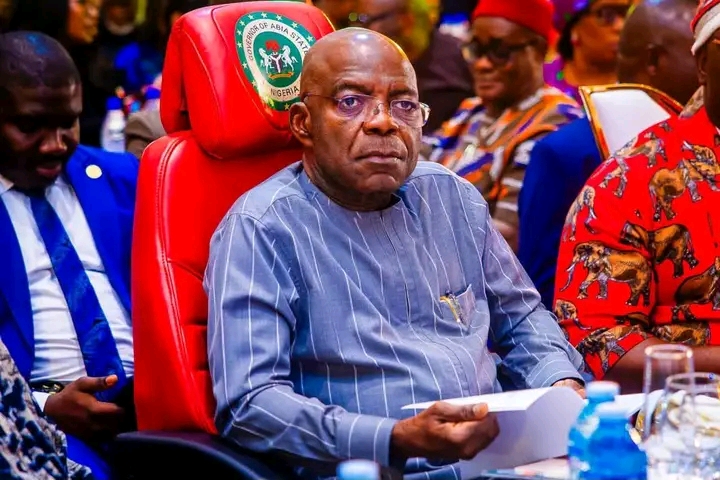
Abia State Governor, Dr. Alex Otti, OFR, has said his administration is deliberately repositioning the state from conventional trading toward manufacturing, digital commerce and technology-driven economic activities.
Governor Otti made the disclosure on Monday, September 28, 2026, at the Michael Okpara Auditorium, Umuahia, during the Igbo Day Lecture and Dinner organised by Ohanaeze Ndigbo Worldwide.
The event, themed “The Igbo Charter and Development of Ala Igbo,” brought together political leaders, traditional rulers, business leaders, professionals, religious figures and other members of the Igbo community to discuss strategies for regional development.
Speaking on the future of commerce in Abia, Governor Otti said the state’s long-standing reputation as a major trading centre must evolve to reflect changes in the global economy.
He explained that although physical markets remain important, Abia must increasingly focus on manufacturing and digital platforms that allow businesses to reach customers beyond traditional geographical boundaries.
“We are leaving that place of trading. In Abia, we have markets; the markets are important. But we are moving from the market to manufacturing,” Otti said.
The Governor explained that his administration is supporting manufacturing while promoting digital delivery, describing the transition from physical stores to technology-enabled commerce as part of the state’s economic direction.
He further referenced global digital marketplaces such as Alibaba, saying Abia entrepreneurs should position themselves to participate in the expanding digital economy rather than remain dependent solely on conventional retail structures.
According to Otti, technology will provide Abia businesses with opportunities to compete on a global scale while also creating new avenues for employment, innovation and entrepreneurship.
The Governor also highlighted the importance of investing in digital skills, particularly among young people. He pointed to the state’s TechRise initiative, through which young Abians are being trained in various areas of digital technology.
Otti said some beneficiaries of the programme are already working remotely for international technology companies while based in Aba.
“When I spend money here training my young people in digital technology under the TechRise initiative, I know what I am doing. Some of them are already working for Google and Amazon from Aba,” the Governor said.
He urged Abians and Ndigbo to embrace technological advancement, stressing that businesses that adapt to changing methods of production, marketing and service delivery will have greater opportunities to participate in the modern global economy.
Governor Otti also assured the President-General and leadership of Ohanaeze Ndigbo Worldwide of his administration’s support.
He described the theme “Njikọ Ka,” meaning “Unity is Supreme,” as appropriate, noting that unity remains important to the collective advancement of Ndigbo despite differences in political, social and economic interests.
The Governor maintained that his administration had laid the groundwork for continued development in Abia and expressed confidence that the state would sustain its transformation.
“We have retrieved and recovered our State. And the only way to go is up. Once you have laid the foundation, the only way to go is up,” Otti said.
At the event, the Chairman of the Igbo Charter Committee for Strategic Engagement for National Development, Prof. Kingsley Moghalu, delivered his keynote address virtually.
Moghalu said the Igbo Charter should remain separate from partisan politics and serve as a non-partisan framework for long-term development. He identified merit, accountability and measurable targets as important principles for implementing the Charter.
He listed several areas requiring attention, including the promotion of the Igbo language, development of a digital marketplace, stronger diaspora engagement, improved security and investment, and a shift from reliance on remittances toward productive investments.
Moghalu also advocated true federalism, equitable citizenship and greater devolution of power, while urging Ndigbo to move from discussions and resolutions to practical implementation.
In his welcome address, the President-General of Ohanaeze Ndigbo Worldwide, Senator John Azuta-Mbata, said the Igbo Lecture and Dinner was organised to harness the collective abilities of Ndigbo and develop a unified strategy for regional advancement.
Azuta-Mbata noted that despite the enterprise, resilience and individual achievements of many Igbo people, there remained a need for greater collective action to fully realise the potential of Ala Igbo.
He said the Igbo Charter for Strategic Engagement for National Development, developed by more than 67 Igbo technocrats and business leaders, provides a documented framework for engaging the Nigerian government and the international community.
According to him, the Charter also proposes measures to preserve Igbo culture, particularly the Igbo language. He suggested that Igbo language should be made compulsory in primary and secondary schools across Igboland.
Azuta-Mbata also called on the Federal Government to pursue a political solution to the case involving Mazi Nnamdi Kanu.
Earlier, the Chairman of the occasion, Chief Onyema Ugochukwu, urged Ndigbo to work collectively toward developing Ala Igbo.
He encouraged the people to focus on building a stronger future rather than remaining preoccupied with complaints about perceived disadvantages.
Chief Ugochukwu also commended Governor Otti for his administration’s activities in Abia and praised the leadership of Ohanaeze Ndigbo for sustaining the annual Igbo Day observance.
The event featured a panel discussion moderated by Chief Enyinnaya Onukalu and was attended by the Deputy Governor of Abia State, Engr. Ikechukwu Emetu, FNSE, members of the National Assembly, traditional rulers, members of the clergy and other stakeholders from across the Igbo community.
ALSO READ: Abia Government Calls on Youths to Apply for Nigerian Air Force Recruitment 2026
The discussions placed particular emphasis on technology, manufacturing, digital commerce, human capital development, cultural preservation and collective action as important areas for the future development of Abia and Ala Igbo.


[…] Gov. Otti: Abia Moves From Conventional Trading to Digital Commerce, Urges Ndigbo to Embrace Technol… […]