


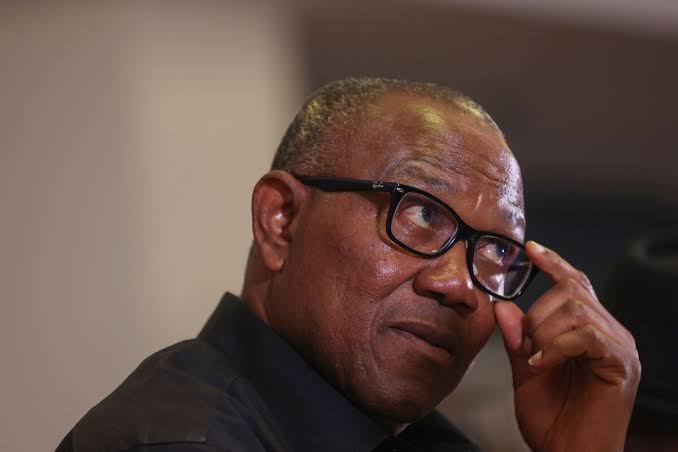
Former Labour Party presidential candidate Peter Obi has formally joined the African Democratic Congress (ADC), marking another shift in his long political journey that has seen him move from APGA to PDP, then Labour Party, and now ADC. Nearly three years after the 2023 presidential election, Obi’s defection has reignited debates about his political direction, leadership credentials, and continued criticism of the election outcome in which he finished third.
Since the 2023 polls, Obi has consistently maintained that he was unfairly denied victory. However, post-election data analyses and independent assessments of the results suggested that his chances of winning were limited and that his final position was shaped largely by regional voting patterns, particularly in the South East. Despite these findings, Obi’s public statements continue to reflect dissatisfaction with the outcome.
At his recent ADC event, Obi emphasized lessons drawn from books, academics, and international examples, arguing that exposure to global best practices positions him to lead Nigeria toward development.
Critics, however, question this narrative, pointing to his eight-year tenure as governor of Anambra State, which they describe as underwhelming relative to his lofty national aspirations. They argue that effective national leadership requires more than theoretical knowledge or foreign models.
A major criticism of Obi’s approach is the reliance on policy templates from other countries. While global experiences can offer insights, analysts note that national development cannot be achieved through imitation alone. Nigeria’s unique economic, social, and political realities demand locally tailored solutions driven by original thinking and deep institutional understanding.
In contrast, supporters of President Bola Ahmed Tinubu highlight what they describe as tangible reforms since his inauguration on May 29, 2023. The Tinubu administration has implemented major economic restructuring, removed petrol subsidies, reduced overreliance on oil revenues, and prioritized gas development. These policies have reportedly attracted local and foreign investments, strengthened foreign reserves, and contributed to relative exchange rate stability, with inflation showing signs of moderation.
The administration has also launched large-scale infrastructure projects, including the Lagos–Calabar Coastal Highway and the Sokoto–Badagry Superhighway, alongside comprehensive tax reforms scheduled to take effect in January. These reforms aim to harmonize Nigeria’s fragmented tax system, improve revenue generation, and raise the tax-to-GDP ratio to support long-term economic growth.
ALSO READ: Abuja Court Sends Ex-AGF Malami, Wife and Son to Kuje Prison
As Obi settles into the ADC, political observers suggest his influence within the party may be limited, with speculation that he could once again emerge as a vice-presidential candidate ahead of the 2027 elections. Ultimately, his defection has deepened discussions about leadership, policy originality, and the contrasting governance philosophies shaping Nigeria’s political future.