


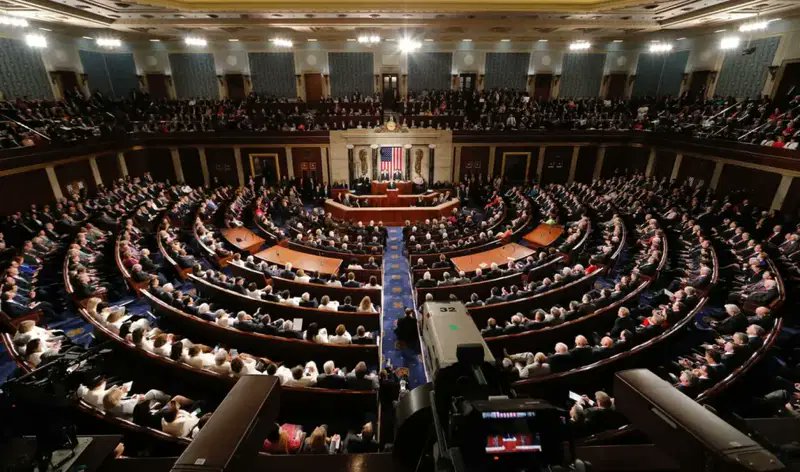
U.S. Congress Criticises Nigeria’s $9M Washington Lobbying Contract Amid Religious Freedom Concerns
In a strongly worded session this week, a United States congressional hearing on global religious freedom raised serious concerns about the Nigerian Federal Government’s reported $9 million lobbying deal with Washington-based firms. Lawmakers warned that the contract appeared to be designed to downplay human rights and religious freedom violations rather than address them.
The joint hearing on Wednesday, hosted by the House Subcommittee on Africa and the Subcommittee on the Western Hemisphere, carried the theme “Defending Religious Freedom Around the World.” Testimony came from key figures in global religious freedom advocacy, including former U.S. Ambassador-at-Large for International Religious Freedom Sam Brownback and Dr. Stephen Schneck, former chair of the U.S. Commission on International Religious Freedom.
Chairman Chris Smith, who leads the House Foreign Affairs Africa Subcommittee, reiterated his support for the United States’ October 2025 decision to designate Nigeria as a Country of Particular Concern (CPC) under the International Religious Freedom Act, saying the move was long overdue given years of violence against religious communities.
He criticised Nigeria’s lobbying strategy, especially its contract with the DCI Group worth $750,000 per month, and a separate deal with Washington consultants Valcour for $120,000 monthly. Smith said these agreements were pushing messaging that “there is nothing to see here,” potentially obscuring the severity of the situation from lawmakers.
Other lawmakers expressed mixed views. Ranking Member Sara Jacobs took issue with what she described as a narrow focus on Christian persecution, pointing out that the U.S. had cut hundreds of millions of dollars in foreign aid to Nigeria, including programmes aimed at supporting faith leaders and peacebuilding efforts in conflict zones.
ALSO READ: Peter Obi Reacts to Senate’s Rejection of Electronic Transmission
Critics of the lobbying deal argued that hiring powerful Washington firms to influence Congress and the executive branch may undermine efforts to pressure Nigeria to improve protections for vulnerable religious groups. Meanwhile, defenders of stronger U.S. engagement said sustained attention from American lawmakers could help hold governments accountable and push for concrete protections.
This debate unfolds against a backdrop of ongoing tensions over religious freedom in Nigeria, where U.S. officials and independent organisations have documented violent attacks against communities and called for deeper cooperation to protect citizens from abuses.