

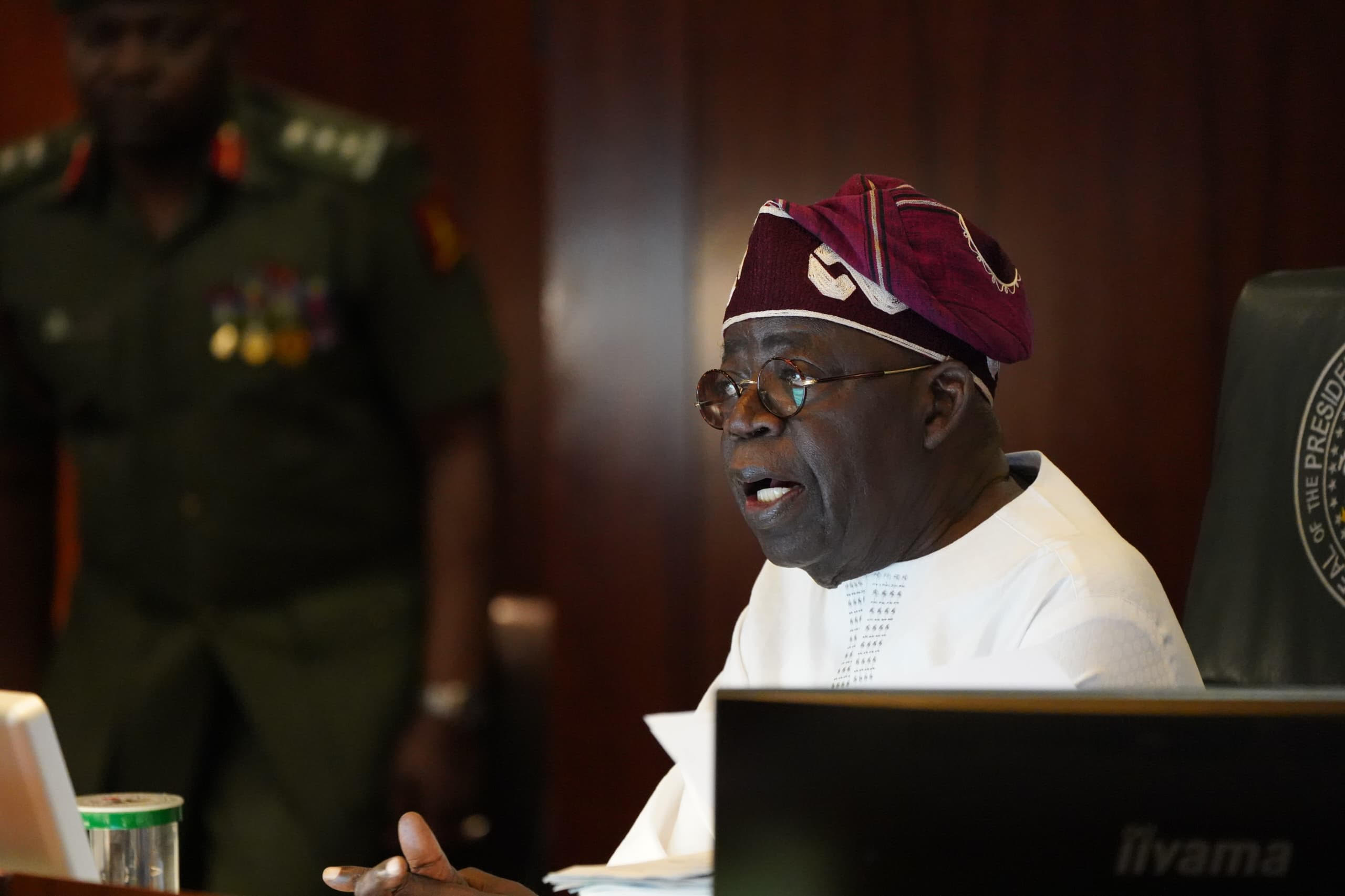
Nigeria’s President, Bola Ahmed Tinubu, has urged citizens to remain thankful despite the ongoing surge in fuel prices, a development that continues to strain household budgets across the country.
Speaking during an official visit to commission key infrastructure projects, including the Yenagoa City Road and a newly completed gas turbine facility, the president acknowledged the financial pressure caused by rising petrol costs. Current fuel prices in Nigeria range between ₦1,227 and ₦1,400 per litre—figures that have sparked widespread concern among citizens.
In his remarks, Tinubu emphasized the importance of maintaining a positive outlook, noting that despite the economic challenges, Nigeria’s fuel prices remain relatively lower compared to some African countries like Kenya, where petrol prices are reportedly higher when converted to local currency.
“The fuel price is biting hard, but let us remain grateful. Compared to others in Africa, we are still in a better position,” the president stated.
However, the statement quickly drew criticism from many Nigerians, particularly on social media platforms. Several users described the comments as insensitive, pointing to the current economic realities marked by rising inflation estimated at around 15% and a comparatively lower GDP per capita than countries like Kenya.
The backlash underscores growing public frustration over recent economic reforms, especially the removal of fuel subsidies. While the government maintains that these measures are necessary for long-term economic stability and fiscal sustainability, many citizens continue to grapple with the immediate impact, including increased transportation and living costs.
Economic analysts note that while subsidy removal may yield future benefits, the short-term consequences have intensified financial hardship for millions of Nigerians. The situation has sparked ongoing debates about the balance between economic reform and social welfare.
ALSO READ: INEC Postpones Nationwide Voter Revalidation Exercise
As the conversation continues, Tinubu’s remarks have further highlighted the widening gap between policy intentions and public perception, raising important questions about communication, empathy, and economic priorities in Nigeria’s reform journey.

