

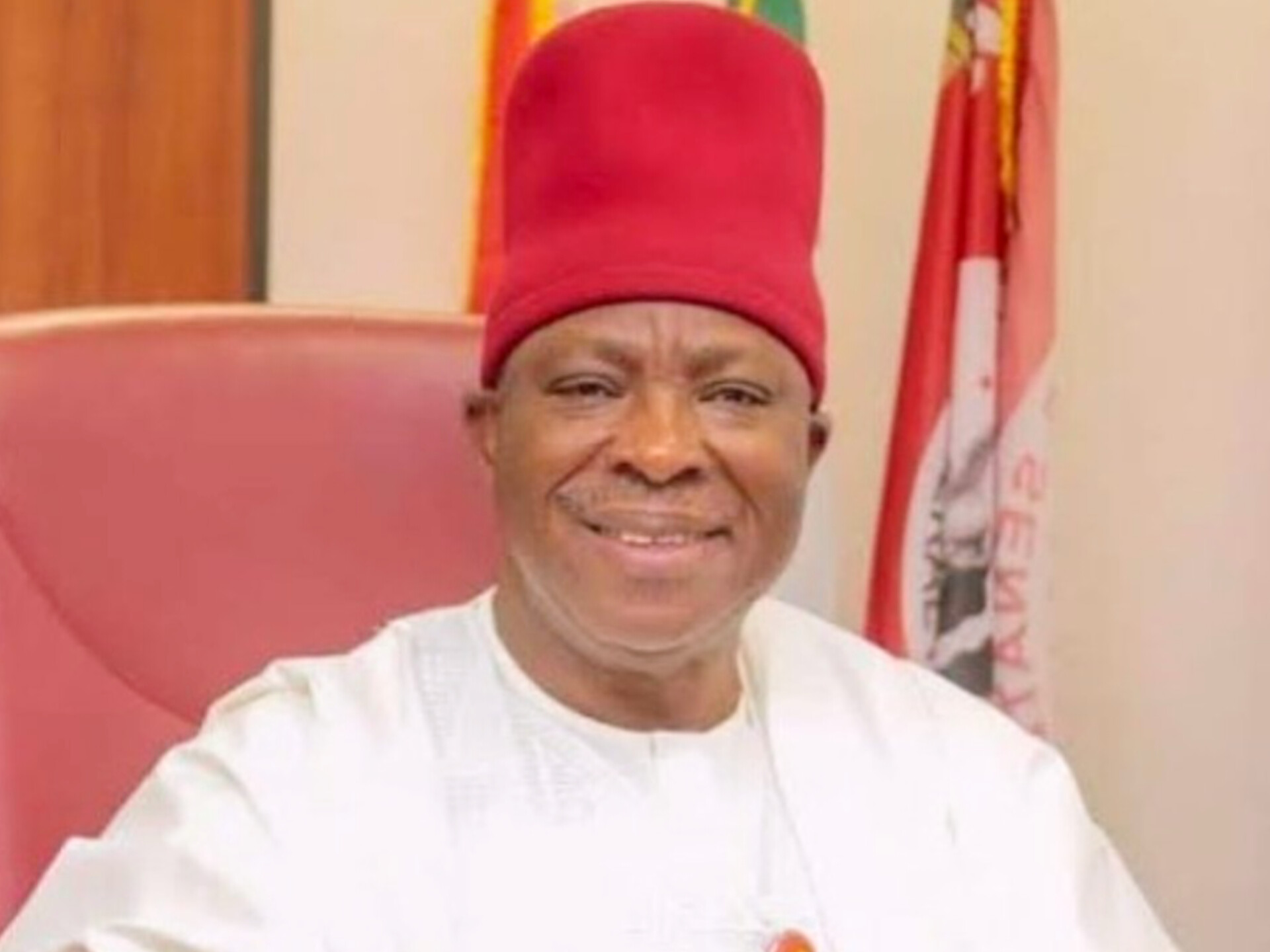
Victor Umeh explains why Peter Obi left ADC, citing internal party struggles and Obi’s rejection of transactional politics.
Senator Victor Umeh has shed more light on the political circumstances that led to Peter Obi leaving the African Democratic Congress (ADC), while also addressing growing conversations around “transactional politics” in Nigeria.
Speaking during an interview on Trust TV News, Umeh explained that many Nigerians were initially uncertain whether Peter Obi would eventually emerge as the presidential candidate of the ADC.
According to him, the doubts surrounding Obi’s chances discouraged many supporters from fully joining or investing in the party at the time.
The former Anambra senator stated that after Obi and his allies joined the ADC and closely observed developments within the party, concerns about internal power struggles quickly became noticeable.
He claimed that some party members began behaving as though the ADC belonged to them personally.
Umeh further alleged that one of the presidential aspirants within the party openly claimed responsibility for financing and promoting the ADC, a development he said exposed deeper issues within the party structure.
According to him, these internal dynamics contributed significantly to Peter Obi’s decision to leave the party and seek a more suitable political platform ahead of the presidential election.
The senator also used the opportunity to defend Obi’s political principles, arguing that opposition against the former Labour Party presidential candidate often stems from his refusal to engage in what he described as “transactional politics.” Umeh suggested that Obi’s political approach differs from the traditional style where financial influence and personal interests dominate political loyalty.
In another part of the interview, Umeh addressed the withdrawal of support from Nollywood actor and politician Kenneth Okonkwo. He alleged that disagreements over financial expectations contributed to the fallout between Okonkwo and Obi.
The comments have since sparked reactions online, with supporters and critics debating the role of money, loyalty, and internal party politics in Nigeria’s democratic process.
ALSO READ: FIFA Introduces Sign Language Broadcasts for 2026 World Cup Matches
Umeh’s remarks add a fresh perspective to ongoing discussions surrounding coalition politics, party leadership, and the future of opposition movements in Nigeria.

