

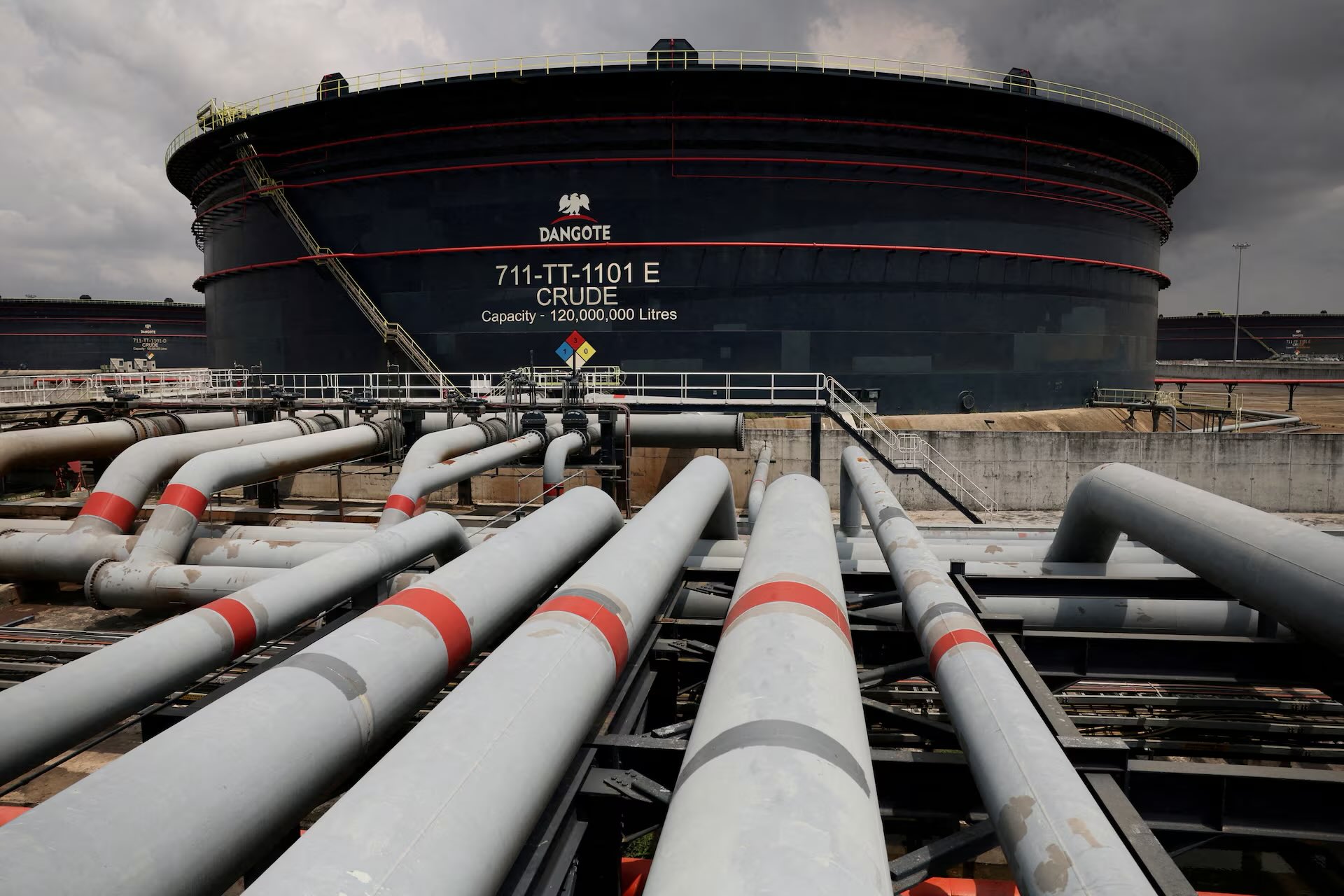
Dangote Petroleum Refinery and Petrochemicals has clarified that the prices of its petroleum products are not determined by daily fluctuations in international crude oil prices, explaining that crude oil is purchased well in advance under long-term commercial agreements.
The clarification comes amid public discussions over recent changes in fuel prices and expectations that local pump prices should immediately reflect declines in global crude oil benchmarks.
In an official statement, the refinery reaffirmed its commitment to ensuring Nigerians benefit from favourable market conditions through fair, responsible and sustainable pricing of petroleum products.
According to the company, it has consistently reduced fuel prices despite processing crude oil acquired when international oil prices were significantly higher than current market levels.
Since May 30, 2026, the refinery disclosed that it has cut the ex-depot price of Premium Motor Spirit (PMS) by more than N200 per litre, reduced the price of Automotive Gas Oil (diesel) by N300 per litre, and lowered the cost of Jet A1 aviation fuel by N520 per litre.
The refinery described these reductions as evidence of its commitment to passing cost savings on to consumers while maintaining the financial and operational sustainability of its refining operations.
Explaining its pricing model, Dangote Refinery noted that crude oil is procured several weeks and in some cases months before it is refined. These purchases are made under commercial contracts based primarily on monthly average pricing mechanisms rather than daily spot market prices.
As a result, petroleum products currently being supplied were produced from crude inventories purchased at significantly higher costs than today’s prevailing international prices.
The company revealed that the average landed cost of crude processed stood at approximately $124.80 per barrel in May and $95.25 per barrel in June, compared to the current international benchmark of around $71.01 per barrel.
It further explained that its crude oil is not purchased at the headline ICE Brent benchmark price commonly reported in the media. Instead, purchases are based on Dated Brent, with additional market premiums, freight charges and logistics costs, resulting in a higher actual landed cost.
Despite the elevated cost of feedstock, the refinery said it deliberately avoided transferring the full burden of rising crude prices to consumers. Instead, it absorbed a significant portion of the increased costs to help stabilise the domestic fuel market, ease inflationary pressures and protect Nigerians from the sharp volatility in global energy markets.
According to the company, this pricing strategy has helped keep petroleum product prices in Nigeria lower than those in neighbouring countries, even after accounting for applicable taxes.
Dangote Refinery added that as lower-cost crude cargoes gradually enter its production cycle, it has begun implementing phased reductions in fuel prices.
It disclosed that the latest N50 per litre reduction represents the fourth price cut within one month, bringing cumulative reductions in the ex-depot price of PMS to more than N200 per litre.
The company stressed that its pricing decisions are based on actual production costs and inventory values rather than short-term movements in international oil markets.
Highlighting the benefits of local refining, Dangote Refinery stated that its current production capacity is sufficient to meet Nigeria’s domestic fuel demand, reducing dependence on imported petroleum products, conserving foreign exchange, strengthening energy security and improving price stability for businesses and consumers.
ALSO READ: No More Covered Number Plates: IGP Disu Orders Nationwide Crackdown on Motorists
Looking ahead, the refinery expressed optimism that Nigerians could enjoy further reductions in fuel prices as lower-cost crude inventories replace previously acquired high-cost supplies, provided international market conditions remain favourable.

