

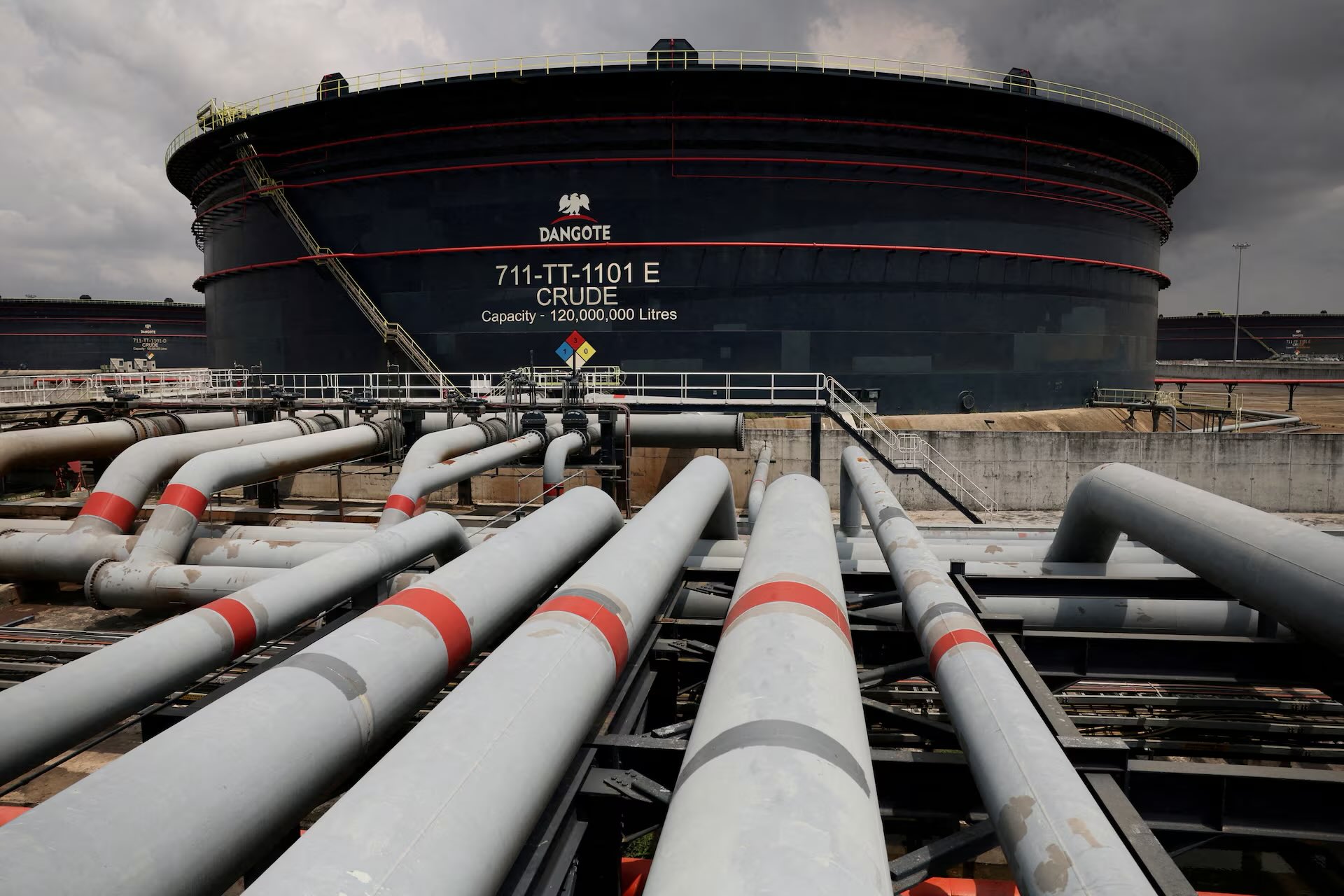
Dangote Petroleum Refinery is reportedly set to stop supplying Premium Motor Spirit (PMS), commonly known as petrol, to major oil marketers that hold active licences to import the product into Nigeria.
The development, according to industry sources, is linked to the refinery’s growing concerns over the continued importation of petrol despite increased domestic refining capacity.
Dangote Refinery is said to be considering a supply policy that would prioritise marketers without petrol import licences. Under the proposed arrangement, companies that continue importing PMS under the Federal Government’s approved import regime could lose access to petrol supplied directly by the refinery.
The six companies currently licensed by the Nigerian Midstream and Downstream Petroleum Regulatory Authority (NMDPRA) to import PMS are Matrix Energy, A.A. Rano, AYM Shafa, NIPCO, Pinnacle Oil and Gas, and Bono Energy.
The licences, issued in May, reportedly provide for a combined import allocation of about 720,000 metric tonnes, with individual companies receiving allocations ranging from 60,000 to 150,000 metric tonnes.
Dangote Raises Concern Over Petrol Imports
The refinery’s position is based partly on the volume of imported petrol entering the Nigerian market. Figures cited by Dangote indicate that imported PMS accounted for approximately 43 per cent of total petrol supply in July.
The refinery argues that the continued inflow of imported products is reducing the market available to domestic refiners, particularly at a time when Nigeria is seeking to increase local refining and reduce dependence on foreign petroleum products.
Dangote has consistently maintained that the growth of domestic refining should be supported by creating a stronger market for locally produced petroleum products.
Quality Concerns Also Raised
Apart from market competition, the refinery has reportedly expressed concerns about the quality of some imported petrol.
According to sources, there are concerns that imported PMS of uncertain quality could potentially be blended with locally refined petrol before reaching filling stations. Such a situation could make it difficult for consumers and regulators to distinguish between locally refined and imported products.
The refinery is concerned that any quality-related complaint involving such blended products could potentially affect the reputation of its petrol, even where the refinery was not responsible for the product in question.
Dangote has also reportedly questioned whether NMDPRA currently has sufficient laboratory capacity to conduct comprehensive testing of all imported petrol entering the country.
Potential Impact on Nigeria’s Fuel Market
If implemented, the new supply strategy could significantly reshape the petrol distribution landscape in Nigeria.
Dangote Refinery could focus its domestic PMS sales on marketers that do not have active import licences, while companies authorised to import petrol may increasingly depend on foreign cargoes to meet their supply requirements.
Such a development could influence the availability of petrol at different depots, the volume of imported cargoes coming into Nigeria and, potentially, pump prices across different regions.
However, the Federal Government’s decision to approve petrol import licences was intended to safeguard national fuel supply and encourage competition within the downstream petroleum sector.
Dangote’s position, on the other hand, is that continued importation could weaken the economic case for expanding domestic refining capacity.
Refinery Warns Against Unsold Petrol
The latest development represents another chapter in Dangote Refinery’s broader argument over Nigeria’s continued dependence on imported petrol.
The refinery has previously indicated that sustained imports could leave it with large volumes of unsold PMS. Rather than incur significant storage costs for excess petrol, the company has suggested that it could redirect more refined products to international markets.
The emerging situation therefore presents a potential policy and market dilemma: while the government wants sufficient petrol supply and competition, domestic refiners want greater protection for locally produced fuel against imported alternatives.
ALSO READ: Nigerian Air Force Recruitment 2026: NAF Opens Application for Tradesmen, Non-Tradesmen
As Nigeria’s refining capacity continues to expand, how the government, regulators, refiners and petroleum marketers manage the balance between local production and imports could have a major impact on the country’s downstream petroleum market.

