

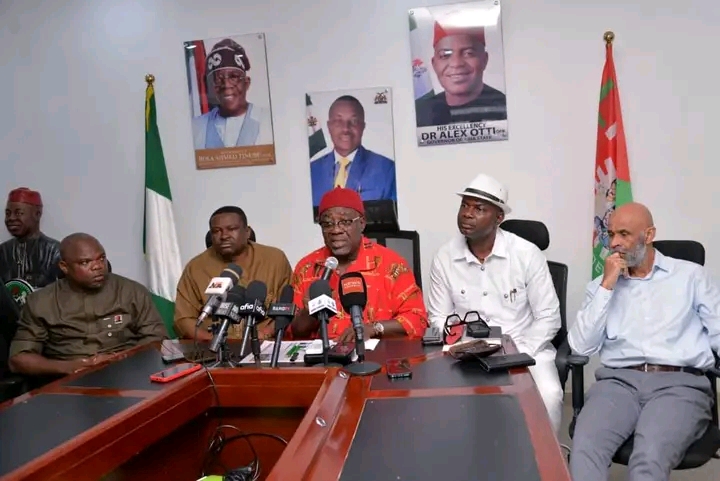
Abia State has continued to record significant progress in healthcare delivery, public health protection, science, technology, and innovation under the administration of Governor Alex Otti.
As part of ongoing healthcare reforms, the state government, through the Ministry of Health, has established a Biomedical Unit to ensure the proper maintenance and timely repair of medical equipment in government-owned hospitals across the state. The initiative is aimed at reducing equipment downtime and improving access to uninterrupted quality healthcare services for residents.
To strengthen local capacity, the government is currently conducting a practical training programme for biomedical engineers and Ministry of Health personnel in partnership with MedShare USA and CPR USA Engineers. The training, which began on May 12 and will end on May 22, 2026, focuses on the maintenance and management of modern medical equipment in public health facilities.
The state also received commendation from the National Malaria Elimination Programme following a notable reduction in malaria prevalence from 16.5 percent in 2024 to 11.5 percent in 2025. In continuation of malaria prevention efforts, the government has concluded plans for the distribution of three million insecticide-treated mosquito nets across the state in September 2026.
Several healthcare infrastructure projects are equally nearing completion. Governor Alex Otti is expected to commission the Obingwa General Hospital and Phase One of the Arochukwu General Hospital as part of activities marking the administration’s third anniversary later this month.
In addition, 15 Primary Health Centres currently being equipped across the state are expected to become fully operational soon. The government also disclosed that the Digital-in-Health Project is being expanded to additional primary healthcare centres to improve healthcare technology and service delivery.
On public health safety, the state government said it remains vigilant following global health advisories issued by the World Health Organization and the Nigeria Centre for Disease Control concerning Ebola outbreaks in parts of Africa. Authorities confirmed that there is currently no recorded case of Ebola in Abia State or Nigeria, while residents have been advised to maintain proper hygiene and seek immediate medical attention when necessary.
Beyond healthcare, the state government is also advancing renewable energy and innovation initiatives through the Ministry of Science, Technology and Innovation. A pilot biogas digester project has already been deployed at a secondary school in Owerrinta to demonstrate the possibility of converting organic waste into renewable energy within educational institutions.
The government noted that the initiative could be replicated in other parts of the state if the pilot project proves successful.
To encourage science and technology education among young people, the ministry is also preparing to host a five-day STEM Week programme for secondary school students across the state.
Activities lined up include educational technology showcases, ICT club engagements, and the launch of a dedicated STEM platform aimed at promoting innovation and increasing the participation of girls in STEM-related fields.
Furthermore, Abia State has commenced the process of setting up a committee under the Federal Government’s Energised Commercialisation Now (ECoN) Programme. The committee will coordinate innovation, research commercialisation, startup participation, and collaboration among government institutions, academia, and industry stakeholders.
The initiative is also expected to drive the development of a comprehensive Abia State Research and Innovation Policy focused on promoting practical, market-ready, and economically beneficial innovations.
ALSO READ: Abia Launches Pilot Biogas Project in Secondary School to Boost Renewable Energy
The Abia State Government reaffirmed its commitment to building a healthier, innovation-driven, technologically advanced, and economically productive society for all residents.

