

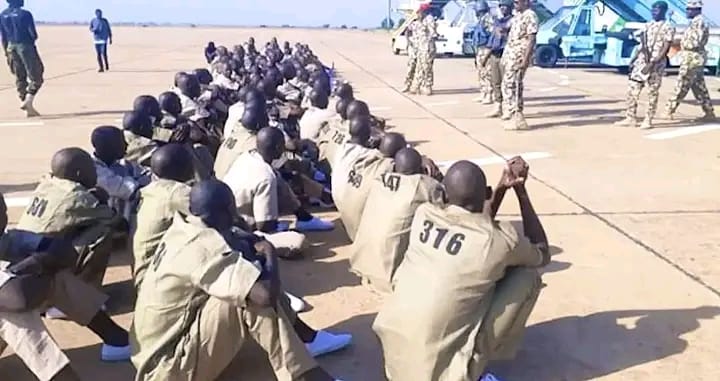
The Federal Government has successfully graduated 744 former insurgents from its De-radicalisation, Rehabilitation and Reintegration (DRR) programme under Operation Safe Corridor, marking a significant step in efforts to address insecurity and promote long-term peace.
The participants, drawn largely from conflict-affected regions, included 597 individuals from Borno State, 58 from Yobe, and smaller numbers from states such as Kano, Bauchi, Adamawa, and others across the country. The programme also accommodated a few foreign nationals, including participants from Cameroon, Chad, Niger Republic, and Burkina Faso.
Speaking at the graduation ceremony in Gombe State, the Chief of Defence Staff, General Olufemi Oluyede, described the initiative as a strategic intervention aimed at tackling the root causes of insurgency. He emphasized that the programme is not an act of amnesty, but a calculated approach to reduce the likelihood of reoffending and disrupt extremist recruitment networks.
According to him, combining military action with structured rehabilitation efforts remains essential to achieving sustainable peace and stability. He urged the graduates to embrace their second chance and reintegrate responsibly into society.
Also addressing the event, the Coordinator of Operation Safe Corridor, Brigadier General Yusuf Ali, highlighted that participants underwent comprehensive support, including psychosocial therapy, vocational training, and value reorientation. He noted that the initiative focuses on rebuilding lives, restoring moral values, and preparing individuals to become productive members of their communities.
Ali further stressed that successful reintegration requires collaboration among government agencies, local communities, and families to ensure lasting impact. He added that equipping participants with practical skills is key to helping them contribute positively to national development.
ALSO READ: Tragic Incident in Abia: Man Allegedly Kills Three in Amakama, Umuahia
The Operation Safe Corridor programme continues to serve as a non-kinetic approach complementing military efforts in Nigeria’s fight against insurgency, with a focus on rehabilitation and sustainable peacebuilding.

