

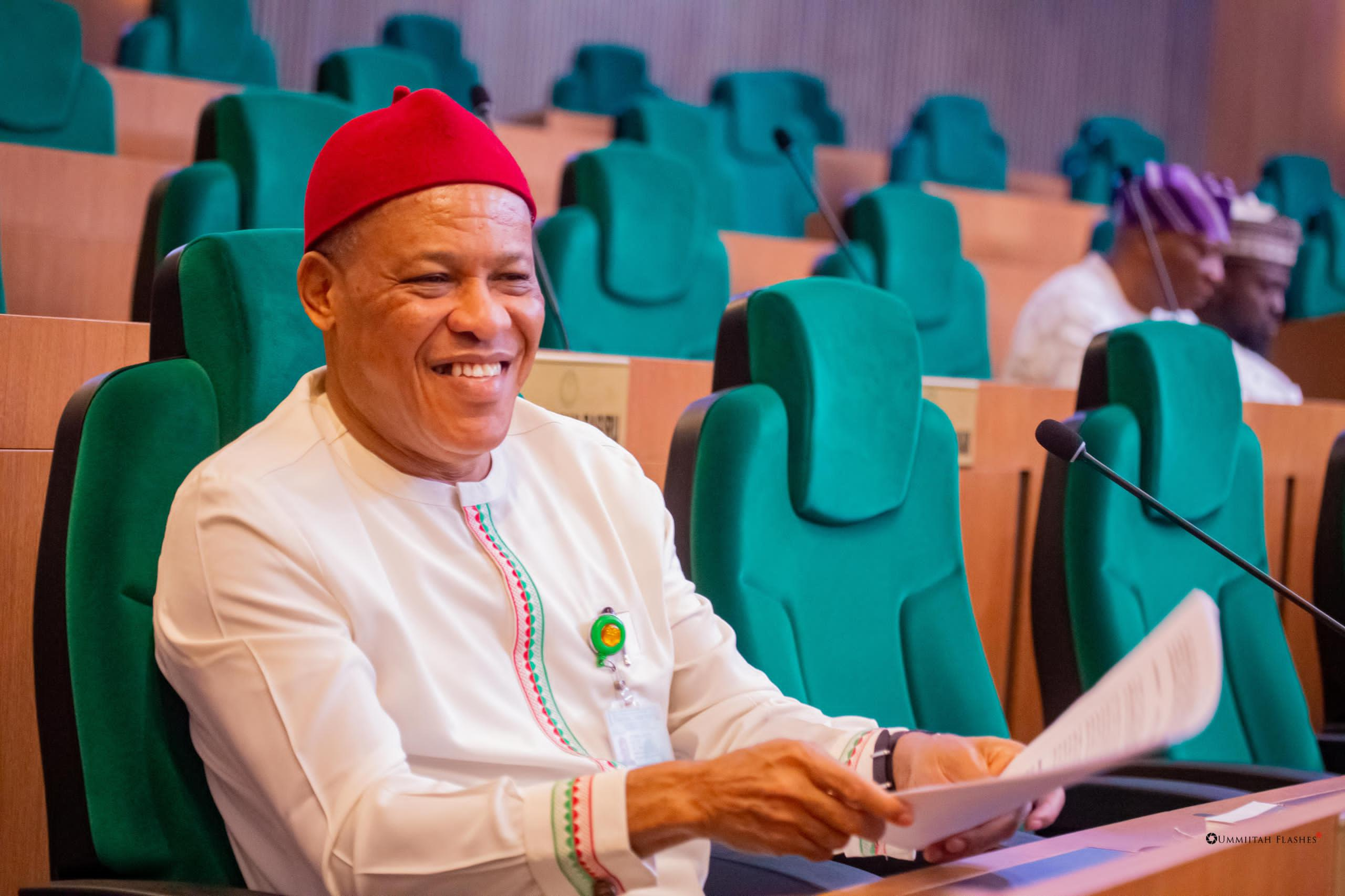
The House of Representatives has called on the Federal Government to reconsider its blanket policy invalidating university degrees obtained from institutions in the Republics of Benin and Togo, following a petition presented by Hon. Obi Aguocha, who represents Ikwuano/Umuahia North and Umuahia South Federal Constituency in Abia State.
The resolution followed the consideration of Petition No. 445, submitted by Aguocha on October 24, 2024, on behalf of Sovereignty Legal Practitioners and other stakeholders in the education sector. The petition challenged the government’s decision to invalidate degrees obtained from universities in the two West African countries, arguing that the policy had unfairly affected Nigerians who graduated from duly accredited institutions.
According to the petitioners, the blanket restriction had created significant difficulties for thousands of graduates, including the suspension of their mobilisation for the National Youth Service Corps (NYSC) scheme. Some affected graduates had also reportedly faced job losses or the threat of losing their employment because their academic qualifications were called into question.
Following the presentation of the petition, the House Committee on Public Petitions launched an investigation into the matter. The committee conducted hearings and engaged relevant government agencies and education authorities to establish the validity and accreditation status of the institutions attended by the affected Nigerians.
As part of its investigation, the committee examined accreditation records obtained from the Federal Ministries of Education and Foreign Affairs, alongside relevant education authorities in Benin Republic and Togo.
The findings presented to the House indicated that several institutions attended by the affected Nigerian graduates were duly accredited and recognised by the appropriate authorities. This raised concerns about the fairness of applying a blanket invalidation policy without distinguishing between genuine academic qualifications and certificates obtained through fraudulent means.
After considering the committee’s report, lawmakers adopted its recommendations and urged the Federal Government to reverse the general invalidation of the certificates.
Rather than maintaining a sweeping restriction, the House recommended the introduction of a comprehensive verification mechanism through which individual qualifications could be assessed. Under the proposed approach, authorities would investigate suspected cases of fraud on their merits while protecting graduates whose certificates were obtained legitimately.
The lawmakers warned that a blanket ban could impose unnecessary hardship on innocent graduates and undermine the credibility of genuine academic achievements. They maintained that efforts to tackle certificate fraud should be targeted at questionable qualifications rather than indiscriminately affecting all graduates from the two countries.
The House also expressed concerns about the possible constitutional implications of the policy, particularly in relation to Sections 36 and 42 of the 1999 Constitution, which address fair hearing and freedom from discrimination, respectively.
In addition, the lawmakers highlighted potential conflicts with regional cooperation arrangements under the Economic Community of West African States (ECOWAS), which promote cooperation among member states, including the recognition of academic qualifications.
The resolution is expected to offer hope to thousands of Nigerian graduates whose certificates have been affected by the government’s policy. For many of them, the restriction has created uncertainty over their eligibility for national service, employment opportunities and other career-related benefits.
By advocating individual verification, the House seeks to establish a balance between the need to prevent academic fraud and the responsibility to protect the rights of genuine graduates. The approach would enable relevant authorities to investigate questionable certificates without automatically penalising individuals who studied at recognised institutions.
The Federal Government is now being urged to consider the lawmakers’ recommendations and adopt a fairer, evidence-based approach to evaluating foreign academic qualifications.
The development also highlights the role of legislative petitions in addressing public concerns and seeking policy adjustments where existing measures may have unintended consequences for citizens.
ALSO READ: Reps Pass Bill to Establish Federal Medical Centre in Ikwuano – Aguocha
If implemented, the proposed review could provide a pathway for affected graduates to have their qualifications reassessed individually, restoring legitimate opportunities while preserving efforts to combat certificate fraud in Nigeria.

