

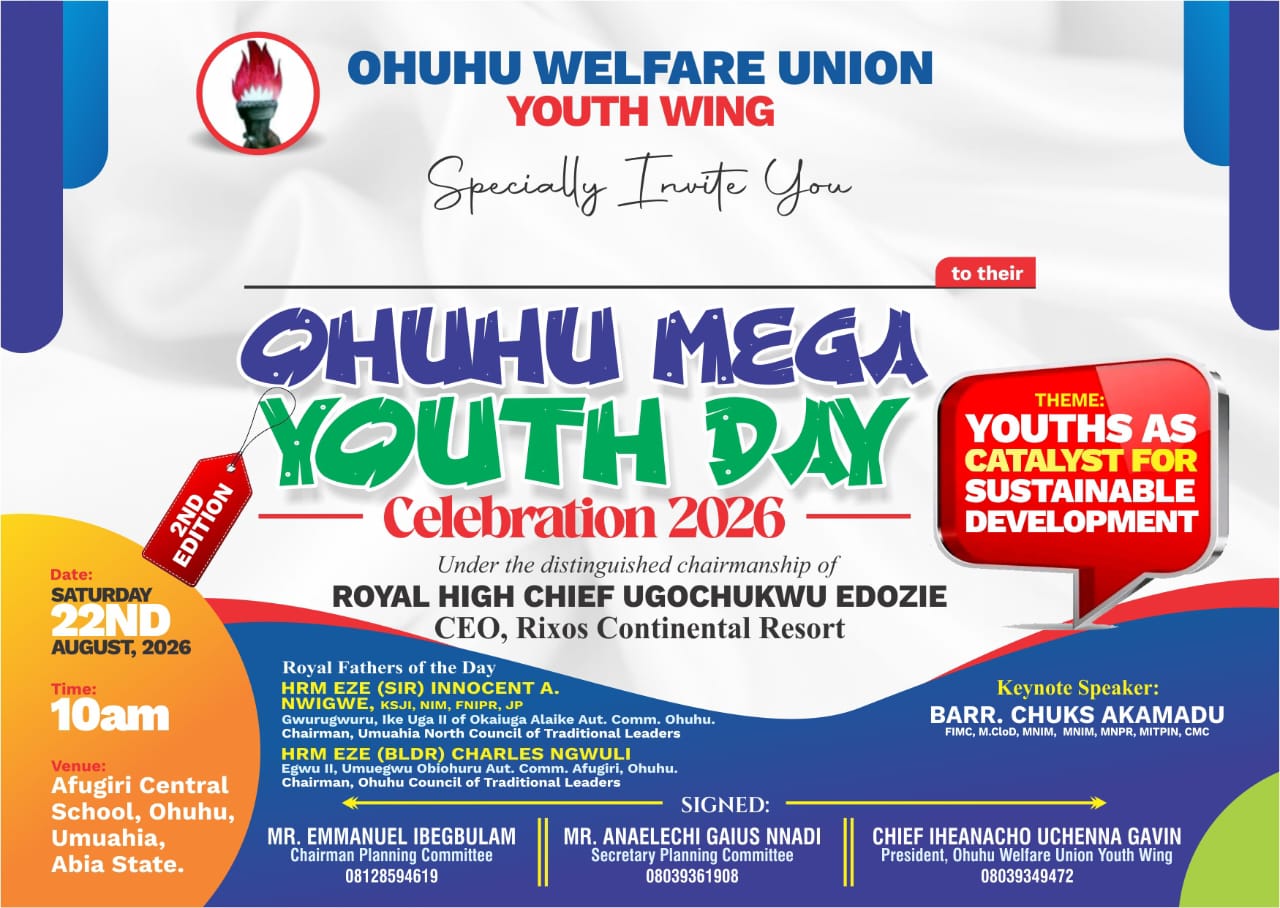
Intergenerational Dialogue: Bridging Ohuhu’s Heritage with the Energy of Its Youth
Every generation carries a unique strength that can contribute to the progress of society. For Ohuhu, the older generation represents a rich reservoir of history, experience, cultural knowledge and community wisdom, while the younger generation brings energy, creativity, technological skills and fresh ideas capable of responding to the demands of a changing world.
When these strengths operate separately, the community can miss valuable opportunities for growth. But when experience and innovation come together, they can create a powerful foundation for sustainable development. This is why intergenerational dialogue should become an important pillar of youth development and cultural advancement in Ohuhu.
Connecting Generations Through Dialogue
Culture is strongest when it is actively shared from one generation to another. Important aspects of Ohuhu heritage cannot be fully preserved through written records or archives alone. They also live in the memories, experiences, stories and practices of the people who have carried them through generations.
Young people should therefore have opportunities to sit with elders and learn directly about Ohuhu history, traditional leadership, family structures, indigenous knowledge, agriculture, traditional occupations, migration, community values, conflict resolution and the evolution of society.
These conversations can be documented through written records, photographs, audio interviews, documentaries and digital archives. Such efforts would help ensure that valuable knowledge does not disappear as older generations pass on.
Establishing an Ohuhu Intergenerational Dialogue Series
One practical approach would be to establish an Ohuhu Intergenerational Dialogue Series through the Ohuhu Youths Welfare Union and other relevant community organisations.
The programme could bring together respected elders, traditional leaders, academics, professionals, entrepreneurs and young people to discuss issues affecting the community.
Importantly, the initiative should not become a platform where elders simply lecture young people. It should be a genuine two-way conversation.
Young people should be encouraged to ask questions, challenge assumptions respectfully and express their perspectives. Elders can provide historical context and explain the circumstances that shaped certain traditions and community institutions. Professionals and academics can contribute contemporary knowledge, while young innovators can introduce technological and entrepreneurial perspectives.
In this way, traditional knowledge and modern expertise can complement each other.
Closing the Generational Gap
Differences between generations are natural, but they can become problematic when there is little communication. Some older people may view younger generations as impatient or increasingly disconnected from traditional values. Young people, on the other hand, may see established institutions as resistant to change.
Regular dialogue can help reduce these perceptions.
When generations interact openly, they are more likely to understand each other’s experiences and expectations. Young people can appreciate the circumstances that shaped earlier generations, while elders can better understand the realities confronting today’s youth.
This creates room for mutual respect rather than unnecessary conflict.
Tradition and Innovation Can Work Together
Preserving culture does not mean rejecting progress. Likewise, embracing modernity does not require abandoning one’s identity.
Ohuhu can protect its core cultural values while embracing education, technology, entrepreneurship, research and other innovations that can improve community life.
The challenge is to find a healthy balance between heritage and modern development. Intergenerational cooperation provides one of the strongest ways to achieve that balance.
Traditional knowledge can offer valuable lessons about community organisation, agriculture, environmental responsibility, social relationships and conflict resolution. Young people can complement this knowledge with digital technology, research, modern business practices and creative approaches to problem-solving.
Together, these perspectives can contribute to practical solutions for contemporary challenges.
Preserving Ohuhu Identity in a Changing World
Globalisation and digital technology have dramatically expanded the influences shaping young people’s identities. Young Ohuhu people now interact daily with cultures, ideas and lifestyles from different parts of Nigeria and the wider world.
This global exposure creates opportunities, but it also makes cultural education increasingly important.
A young person from Ohuhu should be able to participate confidently in the global community while remaining connected to their roots. They should understand where they come from, appreciate their cultural heritage and still have the freedom to innovate and pursue modern opportunities.
That balance will require intentional efforts from families, elders, youth organisations, traditional institutions and community leaders.
Turning Wisdom Into a Foundation for the Future
The purpose of intergenerational dialogue should extend beyond preserving memories of the past. It should help transform historical knowledge and community experience into useful resources for the future.
The wisdom of Ohuhu elders can inform modern approaches to leadership, community development and social responsibility. At the same time, the creativity and technological capabilities of young people can help modernise how the community communicates, documents its history and pursues development.
This creates a cycle of knowledge transfer in which every generation contributes to the next.
Building a Shared Future for Ohuhu
The future of Ohuhu will depend not only on the strength of its youth or the wisdom of its elders, but on the ability of both generations to work together.
Intergenerational dialogue can provide the bridge.
By creating spaces where elders can share knowledge and young people can contribute ideas, Ohuhu can strengthen its cultural identity while preparing its people for the realities of the modern world.
The goal is not simply to preserve the past. It is to ensure that the lessons, values and wisdom of previous generations become part of the intellectual foundation upon which the next generation builds.
ALSO READ: Abia Set for Major Transport Boost as FG Approves N19.7bn Aro-Ngwa Trailer Park
For Ohuhu, connecting the wisdom of its elders with the energy of its youth is not merely a cultural responsibility. It is an investment in unity, identity, innovation and the long-term development of the community.

