

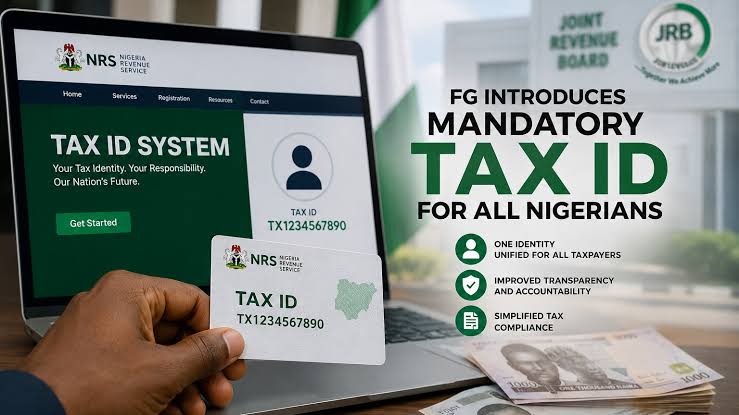
The Federal Government of Nigeria has officially introduced a unified Tax Identification (Tax ID) system aimed at improving tax administration, transparency, and compliance across the country.
The initiative, unveiled by the Nigeria Revenue Service (NRS) in partnership with the Joint Revenue Board (JRB), took effect on May 18, 2026, as part of the ongoing tax reform agenda under President Bola Ahmed Tinubu’s administration.
According to the public notice released by the authorities, the new Tax ID system is designed to create a single and harmonized identity for every taxpayer in Nigeria. The move is backed by the provisions of the Nigeria Tax Administration Act, 2025, which mandates all taxable individuals and businesses to obtain a Tax ID.
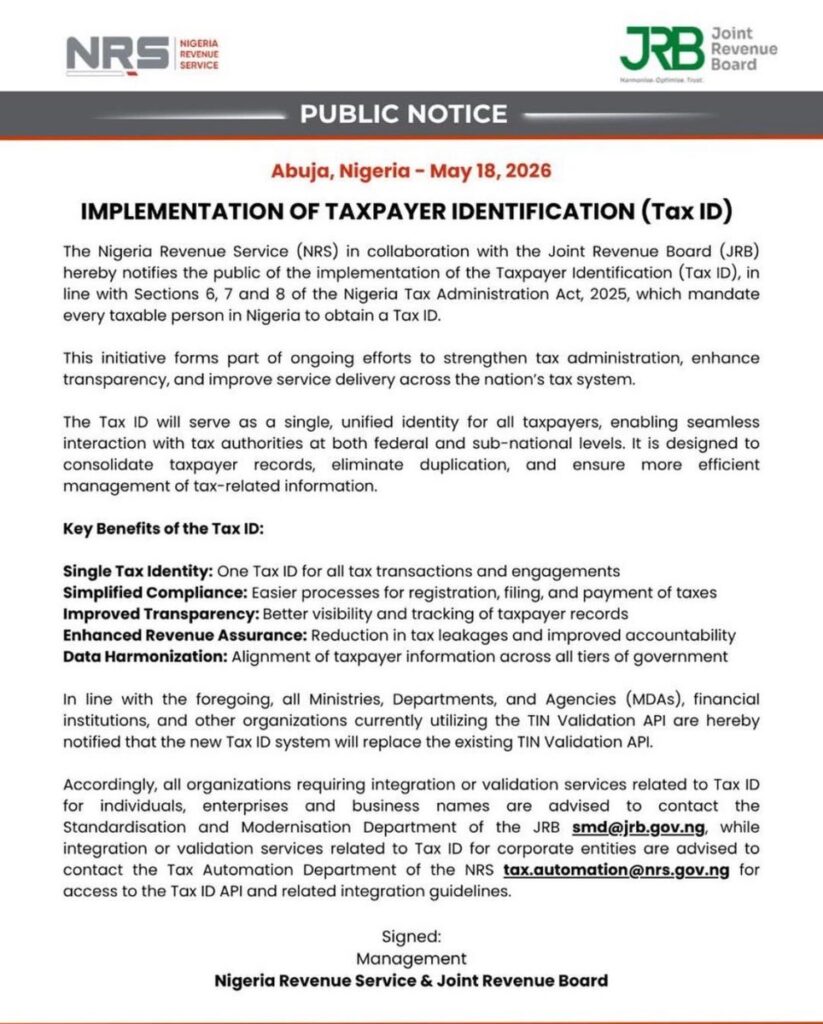
Under the new arrangement, individuals can generate their 13-digit Tax ID instantly online using their National Identification Number (NIN) and date of birth. Businesses and registered enterprises are also expected to access their Tax ID using their Corporate Affairs Commission (CAC) registration details, eliminating the need for fresh applications in most cases.
The government explained that the system would simplify tax-related processes such as registration, filing, and payment while also improving the management of taxpayer records across federal, state, and local government agencies. Authorities believe the reform will help reduce tax leakages, strengthen accountability, and improve revenue collection nationwide.
Officials further stated that the unified Tax ID would replace the existing TIN Validation API currently used by Ministries, Departments, Agencies (MDAs), financial institutions, and other organizations. Institutions requiring integration or validation services have been directed to work with the relevant departments of the JRB and NRS for access and compliance guidelines.
One of the major advantages of the reform is the harmonization of taxpayer information across all levels of government. This is expected to make tax administration more efficient and reduce duplication in taxpayer records. The government also noted that the initiative would enhance transparency and improve service delivery within Nigeria’s tax system.
However, the rollout has sparked mixed reactions among Nigerians, especially amid current economic challenges. While some citizens see the policy as a necessary step toward modernizing the nation’s tax structure, others fear it could result in stricter tax enforcement and additional financial pressure on individuals and businesses already struggling with rising living costs.
Authorities warned that failure to comply with the new Tax ID requirements may affect access to certain services, including banking operations and government contracts from January 2026.
ALSO READ: NDA Announces Date for 78 Regular Course Screening Test
The government has urged taxpayers, businesses, and institutions to comply with the new directive to avoid disruptions and ensure smooth integration into the unified tax system.

