

IKWUANO–UMUAHIA REPRESENTATION SERIES (EDITION 10)
Continuity • Implementation • Federal Presence • Accountability • 2027
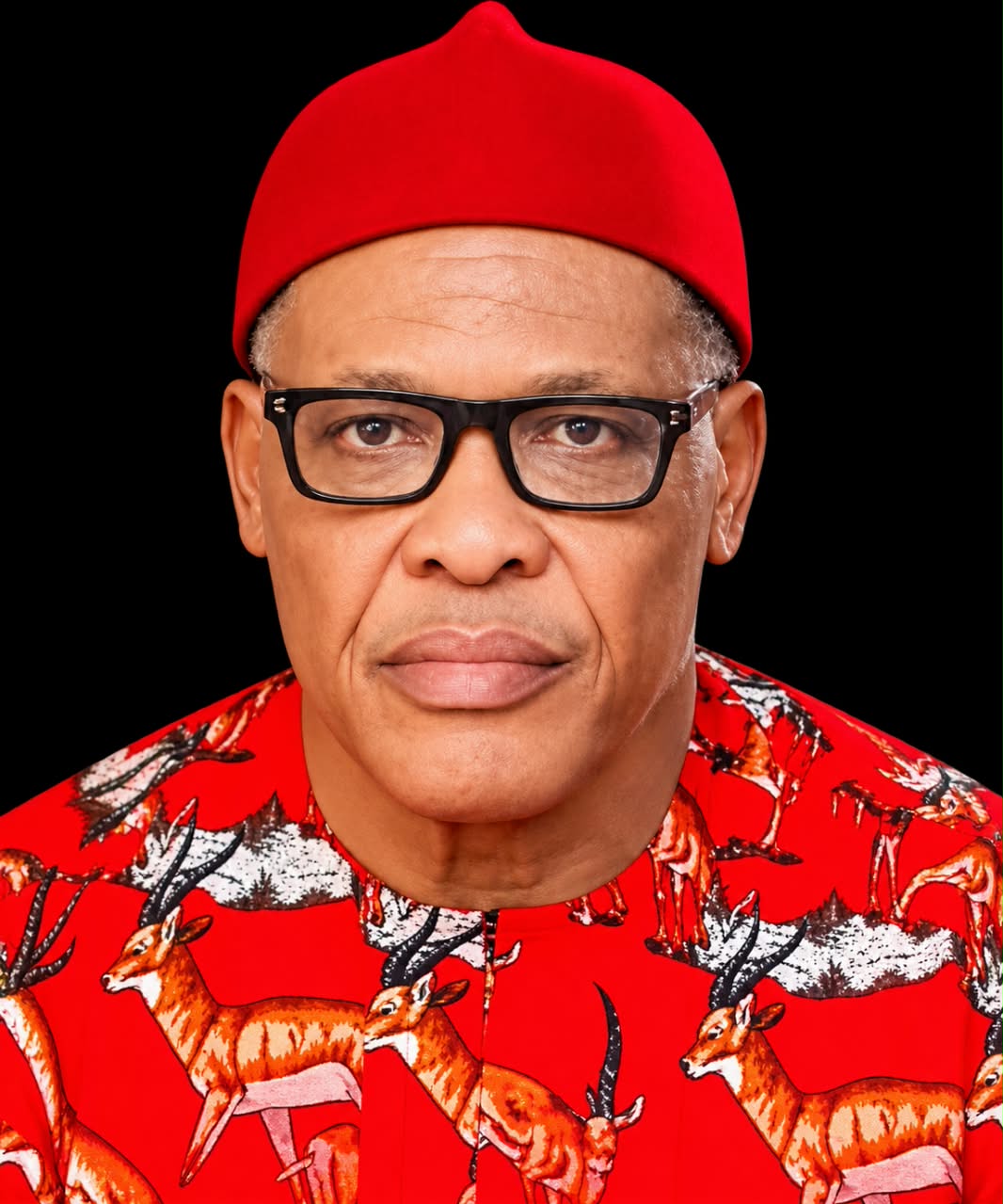
As the 10th National Assembly moves towards its final phase and Rt. Hon. Obi Aguocha seeks another mandate to represent Ikwuano/Umuahia North/Umuahia South Federal Constituency, an important question arises: what remains unfinished from his first term, and what will be required to bring those initiatives to their intended conclusions? Parliamentary representation is often a chain of processes; a bill may pass without immediate implementation, an appropriation may await release, and a House resolution may require sustained executive follow-through. The proper assessment must therefore distinguish between what was initiated, advanced, implemented and completed.
Perhaps the clearest example is HB 1605, seeking the establishment of the Federal Medical Centre, Ikwuano. Introduced on 17 July 2024, it passed Third Reading in the House on 28 April 2026 and reportedly secured Senate concurrence on 16 July 2026. That represents substantial legislative progress, but the real objective is not merely parliamentary passage; it is a functioning tertiary medical institution. The unfinished journey therefore extends through the remaining legal and executive processes to appropriation, infrastructure, equipment, staffing and ultimately healthcare delivery.
A similar challenge surrounds HB 1659, concerning the proposed Nigerian Institute of Mining and Geosciences, Umuahia, which reached Third Reading in the House on 22 July 2026. If eventually established, such an institution could provide specialised training, research, professional development and employment connected to Nigeria’s solid-minerals sector. But here again, the development value will ultimately be measured not by a bill number but by whether the proposed institution becomes operational.
There is also HB 2592, Aguocha’s constitutional proposal for the creation of Ikwuano North and Ikwuano South Local Government Areas. This is inherently a longer constitutional undertaking involving the demanding procedures prescribed by Section 8 of the 1999 Constitution, including state-level processes, stakeholder engagement and other constitutional requirements. Introducing the proposal has placed Ikwuano’s administrative reorganisation on the legislative table; bringing it to institutional reality would require sustained political, constitutional and legislative engagement.
Infrastructure presents another unfinished responsibility. On 3 October 2023, Aguocha formally brought the delayed Umuahia–Ikwuano–Ikot Ekpene Road before the House, which mandated its Committee on Works to investigate and pursue a sustainable solution. Substantial intervention has since occurred through federal activity and the Abia State Government’s involvement. Yet for motorists, farmers, traders and communities along the corridor, the ultimate benchmark remains simple: the road must become completely, safely and sustainably motorable.
Education and human-capital development equally require follow-through. Aguocha has emphasised scholarships, ICT training, educational assistance and skills development as elements of his empowerment philosophy. The next stage must increasingly move from counting beneficiaries to measuring outcomes: how many students complete their education, how many trainees acquire marketable skills, how many obtain employment or establish viable enterprises, and how equitably these opportunities are distributed across Ikwuano, Umuahia North and Umuahia South.
There is also the question of federal appropriations and constituency projects. Public debate has raised questions about projects contained in federal budgets for the constituency. While federal legislators do not personally receive or execute MDA capital allocations, representation should not end when a project enters the Appropriation Act. Oversight begins where appropriation ends. The unfinished task is to track allocations through releases, procurement, execution, completion and functionality, and to make that information sufficiently transparent for constituents to assess.
Taken together, these initiatives give substance to Aguocha’s argument for legislative continuity. The FMC proposal, mining and geosciences institute, Ikwuano local-government reorganisation, road interventions, educational programmes and federal projects are at different stages of maturation. A returning legislator carries knowledge of their history, committee processes, relevant MDAs, budgetary engagements and institutional relationships. Such continuity can be useful, but only if accumulated experience is converted into measurable results.
Aguocha’s case for the 11th National Assembly can therefore be framed around unfinished work rather than tenure for its own sake: here is what was initiated, here is how far it has travelled, here is what remains, and here is what another legislative cycle could be used to pursue. The electorate will ultimately determine how much weight to attach to that argument, alongside the achievements and limitations of his first-term record.
In the final analysis, the difference between political activity and enduring political legacy is often completion. Bills must become effective laws where constitutionally approved; laws must produce institutions; appropriations must become functioning projects; scholarships and training must improve lives; motions must generate sustained oversight; and federal attention must ultimately be felt in the communities. Initiation establishes a record. Follow-through tests capacity. Completion creates legacy.
ALSO READ: Abia to Begin Statewide Mosquito Net Distribution in October, Host 2026 World Igbo Day
IKWUANO–UMUAHIA REPRESENTATION SERIES
Continuity • Implementation • Federal Presence • Accountability • 2027
Aguikwu Emma Ifeanyi, TPM


[…] Obi Aguocha: The Unfinished Business; Which First-Term Initiatives Still Require Follow-Through? –… […]