

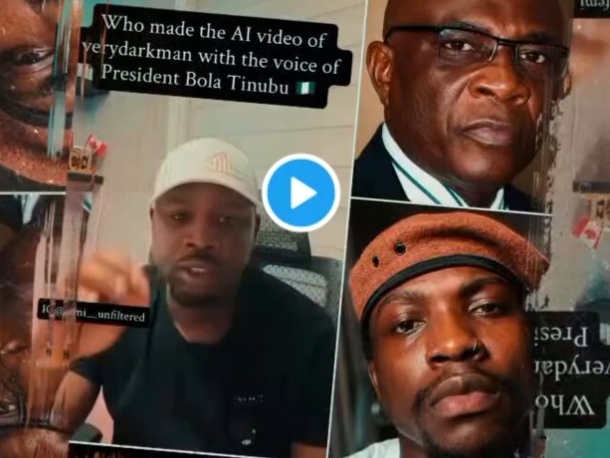
A technology expert has reportedly traced the source of a viral artificial intelligence-generated voice note that was falsely attributed to Nigerian President Bola Ahmed Tinubu.
According to information circulating online, the investigation led to the identification of a suspect, identified as Ifechukwu Dennis, who is alleged to have created and distributed the manipulated audio recording. The voice note, which was widely shared across social media and messaging platforms, reportedly misled many listeners into believing it contained the authentic voice of the Nigerian President.
Sources familiar with the matter claim that the fake audio was generated using advanced AI voice-cloning technology, a growing concern worldwide as synthetic media becomes increasingly sophisticated and difficult to distinguish from genuine recordings.

Reports indicate that a special crack team under the office of the Inspector-General of Police (IGP) tracked the origin of the voice note and subsequently arrested the suspect in Benin City, Edo State. Authorities are said to be investigating the circumstances surrounding the creation and dissemination of the content.
The incident has once again highlighted the dangers posed by AI-generated misinformation, particularly in the political sphere where manipulated audio and video content can influence public perception and spread false narratives.
Security experts have repeatedly warned citizens to verify the authenticity of viral audio recordings before sharing them online. They also urge social media users to rely on credible news sources and official government channels for information involving public officials and national matters.
As investigations continue, the Nigeria Police Force is expected to issue an official statement providing further details on the case and any potential charges that may arise from the findings.
ALSO READ: VIDEO: Oshiomhole Blasts Senate President Over Nigeria’s Security Failures
The development underscores the increasing challenge law enforcement agencies face in combating digital misinformation and cyber-related offenses in the age of artificial intelligence.

