

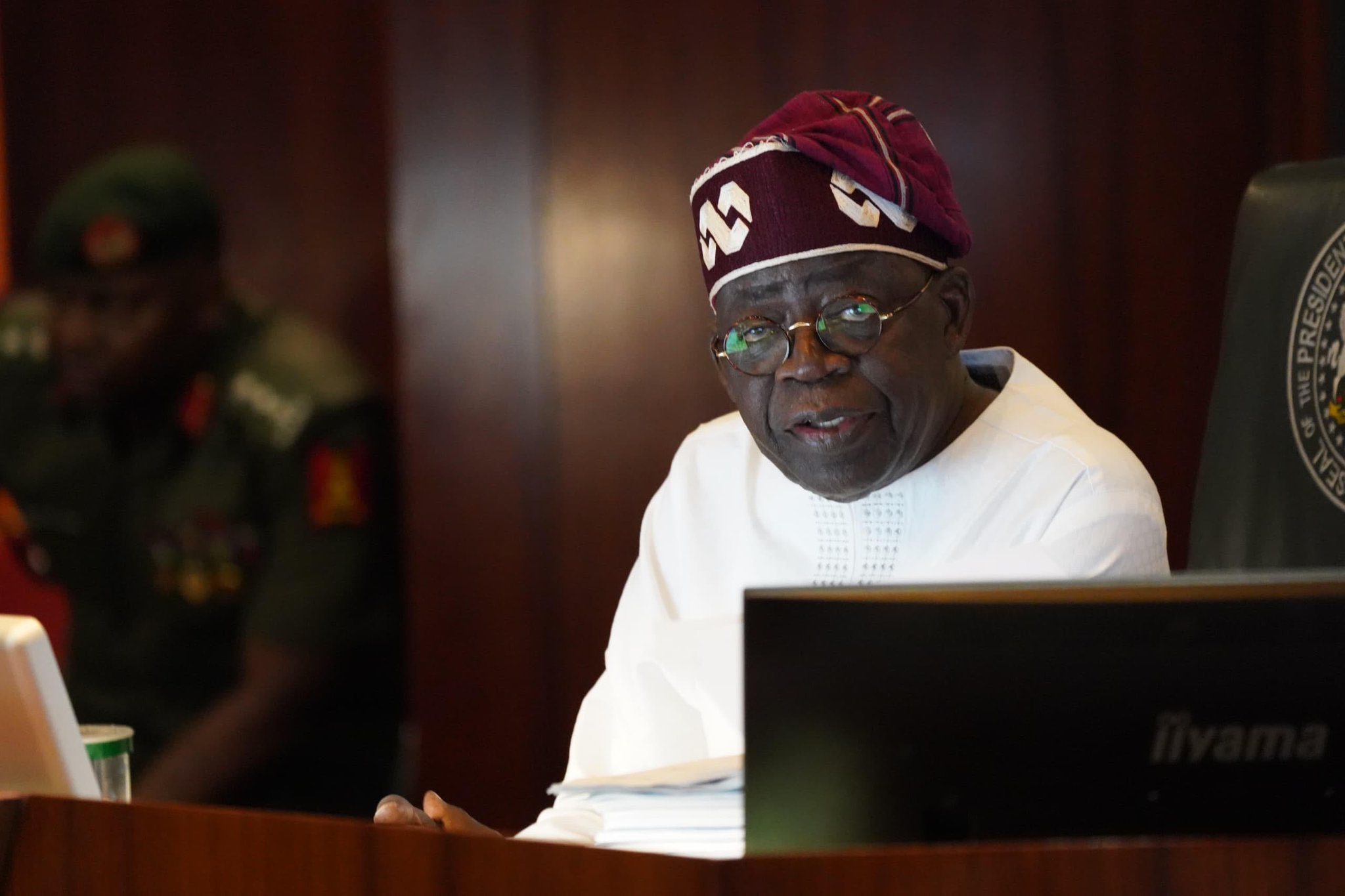
President Bola Ahmed Tinubu has said Nigeria’s refineries must return to full operation and, more importantly, become commercially viable enough to deliver the economic value for which they were established.
Tinubu made the remarks while meeting with the leadership of the Nigerian Union of Petroleum and Natural Gas Workers (NUPENG), stressing that the mere sight of flames or smoke from a refinery should not automatically be interpreted as evidence of successful operations.
According to the President, the ultimate measure of a functioning refinery should be its ability to operate efficiently, produce petroleum products and generate sustainable economic value.
“The refineries you mentioned will come back to work,” Tinubu said. “The ordinary flame and smoke of a refinery doesn’t mean it’s working until it’s profitable and yields the value for which it was built.”
His comments come amid continued public discussions over the rehabilitation and revival of Nigeria’s state-owned refineries, with Nigerians closely watching efforts to restore domestic refining capacity and reduce dependence on imported petroleum products.
Tinubu also defended his administration’s economic policies while responding to concerns about the impact of reforms on ordinary Nigerians.
The President questioned the frequent use of the phrase “common man,” arguing that millions of Nigerians employed by local, state and federal governments are also ordinary citizens whose livelihoods are directly affected by government policies.
“I listen to people say common man and all that,” Tinubu said, asking whether workers receiving salaries at the local government, state and federal levels were not also ordinary men and women.
He further noted that the regular payment of salaries has wider economic implications, particularly for traders, market women and households that depend on the spending power of workers.
According to him, the government’s economic policies should therefore be assessed not only by immediate challenges but also by their potential to strengthen the economy, sustain employment and improve purchasing power.
The President’s remarks highlight the administration’s position that Nigeria’s refinery revival should go beyond restarting plants. For the facilities to have a lasting impact, they must operate efficiently, produce competitively and contribute meaningfully to the country’s energy security and economic growth.
ALSO READ: BREAKING: Atiku Takes Tinubu to Court, Seeks Disqualification Over Alleged NYSC Certificate Forgery
As Nigeria continues its efforts to expand domestic refining capacity, attention is expected to remain focused on whether the rehabilitated facilities can consistently produce refined petroleum products and operate on a commercially sustainable basis.

