

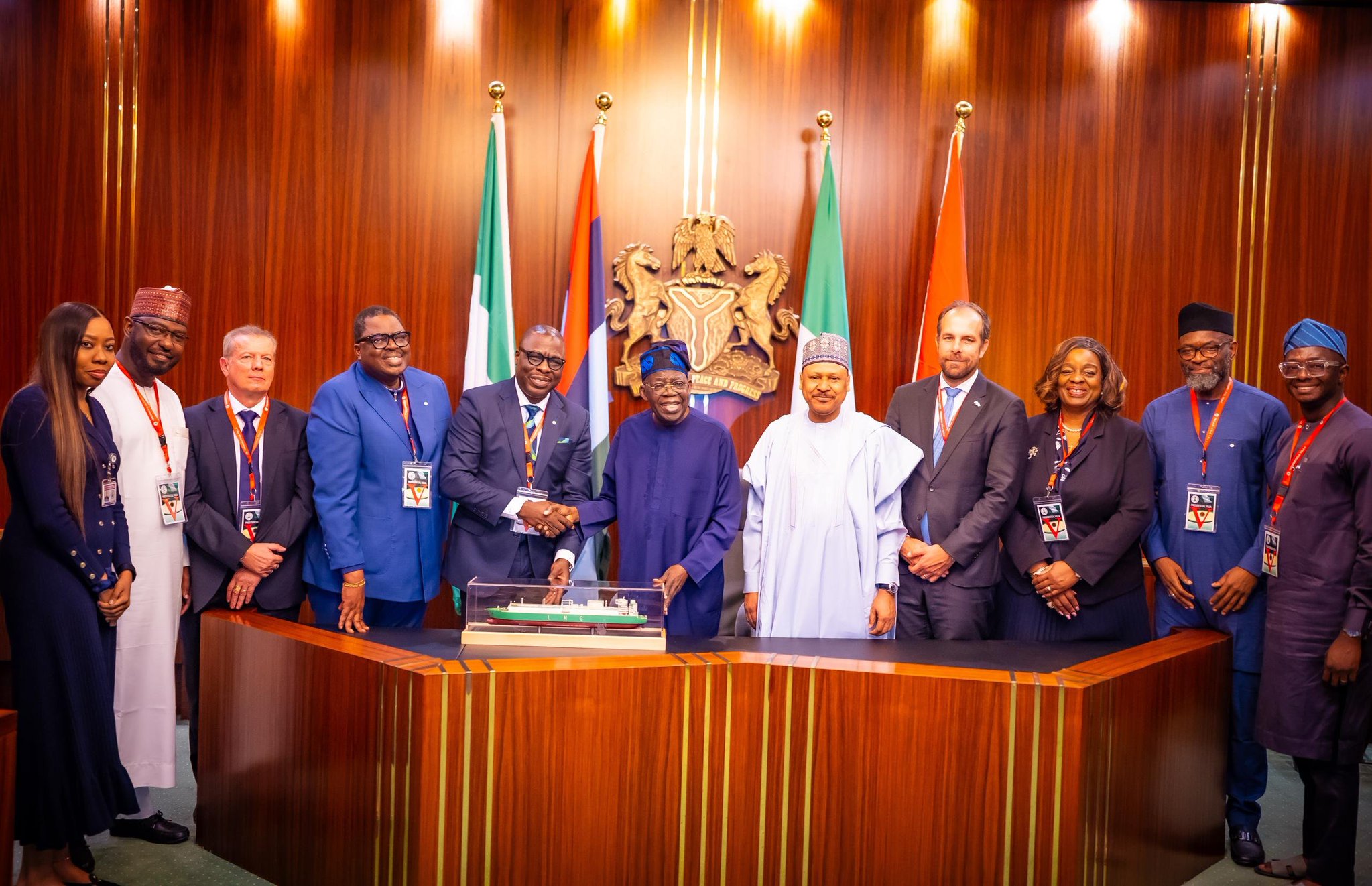
President Bola Ahmed Tinubu has called on the Nigeria Liquefied Natural Gas Limited (NLNG) to intensify efforts to harness Nigeria’s abundant gas resources and reduce gas flaring, stressing that the country must transform its natural resources into tangible economic benefits for Nigerians.
President Tinubu made the call on Wednesday, August 26, 2026, when he received members of the NLNG Board, led by its Managing Director and Chief Executive Officer, Engineer Adeleye Falade, at the State House.
The President said Nigeria could no longer afford to allow valuable natural gas resources to be wasted through flaring when they could instead be processed and deployed to support domestic energy needs, industrial development and economic growth.
Tinubu particularly emphasised the importance of increasing domestic utilisation of gas, urging NLNG to explore ways of turning what could otherwise become an environmental liability into an economic opportunity for consumers and businesses across the country.
He acknowledged NLNG’s progress in expanding its operations and improving revenue generation, but encouraged the company to ensure that its international success is matched by greater benefits for Nigerians at home.
According to the President, Nigeria’s resources must ultimately serve the economy and improve the lives of its citizens. He also assured the NLNG management of the Federal Government’s willingness to provide necessary incentives that could support further investment, expansion and increased production.
The President further highlighted the need for greater attention to domestic energy requirements and pricing mechanisms, saying such measures would help ordinary Nigerians benefit more directly from the country’s natural resources.
During the meeting, NLNG Managing Director Adeleye Falade briefed the President on the company’s operations and recent developments since assuming office in April 2026.
Falade disclosed that NLNG has generated more than $150 billion since its establishment, while its shareholders have received approximately $47 billion in dividends. The Nigerian government holds a 49 percent stake in the company.
He explained that NLNG had previously operated at about 60 percent of its available production capacity due largely to inadequate crude oil production, which meant only four of its six trains were being utilised.
However, increased crude oil production and positive developments across the oil and gas industry have enabled NLNG to raise operations to five trains, with further improvements expected.
The NLNG chief executive also disclosed that the company’s Liquefied Petroleum Gas (LPG), commonly referred to as cooking gas, is currently being supplied entirely to the domestic market.
He said the company is also preparing for the inauguration of Train 7, a major expansion project expected to increase NLNG’s production capacity by about 35 percent. Nigeria LNG currently accounts for approximately five percent of the global LNG market.
Falade further commended the stability of Nigeria’s fiscal environment, noting that it has helped improve investor confidence and attract additional investments into the oil and gas sector. He also praised security agencies and industry regulators for contributing to the improved operating environment.
Another major development highlighted during the meeting was the completion of the Bonny-Bodo Road and Bridge project, which was financed by NLNG. According to Falade, the project has been completed and is now awaiting official commissioning.
The NLNG delegation included Deputy Managing Director Olakunle Osobu; Board Director and Managing Director of TotalEnergies EP Nigeria Limited, Matthieu Bouyer; Board Director, Vice Chairman and Managing Director of Nigeria Agip Exploration, Maurizio Pinna; and General Manager, External Relations and Sustainable Development, Sophia Horsfall.
Also present were Manager, Government Relations and Regulatory Compliance, Abdul Umar; Head of Government Relations, Tonbrafa Nanaghan; and Senior Government Relations Adviser, Rufai Mohammed Lawal.
Minister of Information and National Orientation Mohammed Idris, Special Adviser to the President on Information and Strategy Bayo Onanuga, and Senior Special Assistant to the President on Energy Transition Yasmin Mohammed also attended the meeting.
President Tinubu’s directive underscores the Federal Government’s broader push to maximise Nigeria’s gas resources, strengthen domestic energy supply and ensure that the country derives greater economic and social value from its oil and gas assets.
ALSO READ: ABSU Lecturer’s Suspension: Abia Govt Denies Involvement as Otti Approves Payment of Pension Arrears
The President’s message is that Nigeria’s gas reserves should not simply remain underground or be lost through flaring; they must be converted into energy, industrial opportunities, revenue and improved living standards for Nigerians.
Source: State House Press Release, August 26, 2026.

